Internal Audit Services: A Complete Guide to Strengthening Controls and Compliance
Organizations today face a wide variety of risks. You need a robust system to manage these challenges effectively. An effective internal audit serves as a critical safety net for your business operations. It provides an independent, objective assurance and consulting activity designed to add value. An internal audit helps an organization accomplish its objectives by bringing a systematic, disciplined approach to evaluate risk management.
The internal audit profession has grown significantly over the years. It is no longer just about checking the books or financial accuracy. Modern internal auditing covers operational efficiency, compliance, and strategic alignment. Business leaders rely on the internal audit function to provide insight into the health of the company. This article examines the core aspects of internal audit and how it benefits your organization.
Defining the Internal Audit Function
The internal audit department acts as the third line of defense in risk management. The first line is management, and the second includes compliance teams. The internal audit function provides independent validation that the first two lines are working. An internal audit reviews internal controls to verify they are effective. This process protects the organization from fraud, waste, and abuse.
Every internal audit aims to improve operations. The audit team identifies weaknesses and recommends improvements. Management uses the findings from an internal audit to make informed decisions. This makes internal auditing a strategic partner to the board and executive leadership. Without a strong internal audit, blind spots in your operations can grow unchecked.
The scope of an internal audit is broad. It can cover financial reporting, IT security, and environmental policies. The internal audit function must remain flexible to address emerging risks. Your internal audit plan should align with the company's biggest threats. This alignment makes sure that the internal audit resources are used where they matter most.
💡Key Takeaways
Internal audit acts as the third line of defense in risk management.
The scope covers finance, operations, IT, and compliance.
Management relies on audit findings to fix operational blind spots.
Internal vs. External Audits
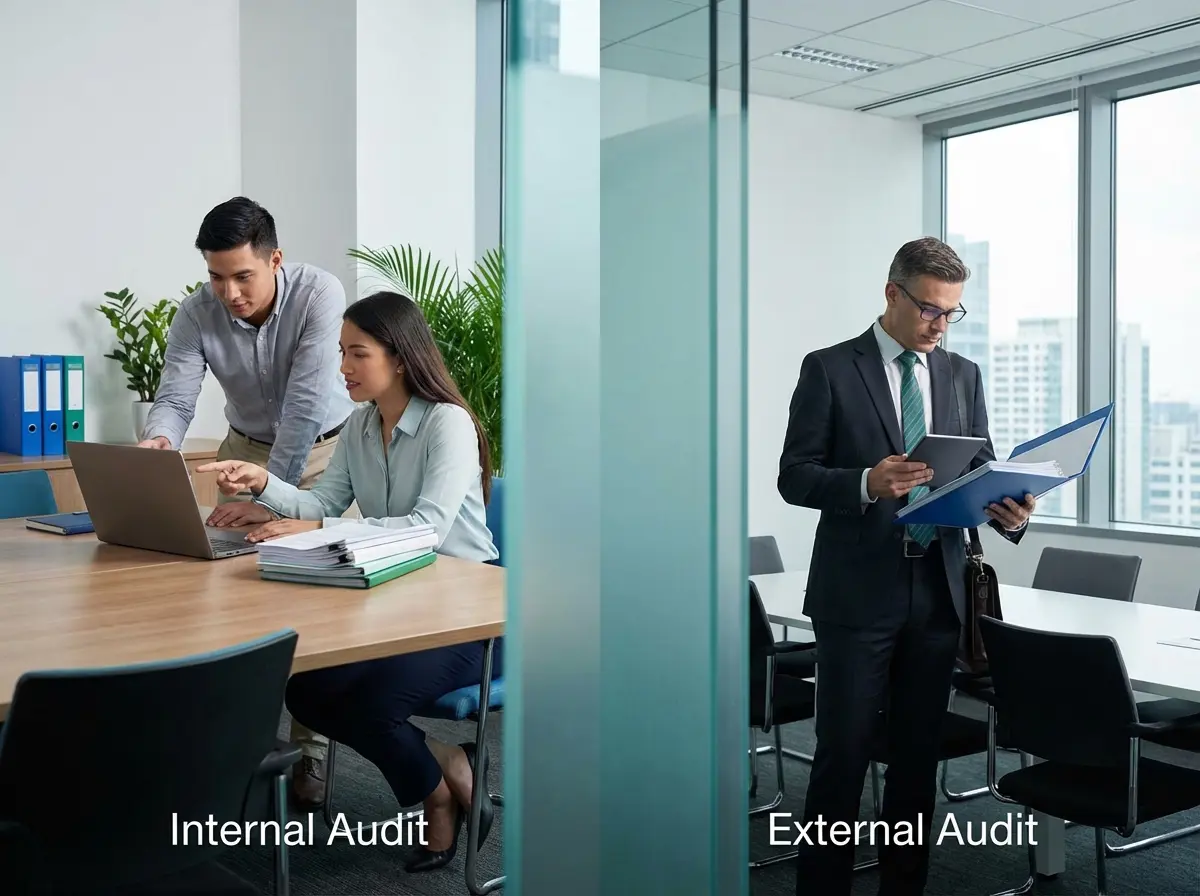
Many people confuse internal audit with external audit. While they share some techniques, their objectives differ. An external audit focuses primarily on the accuracy of financial statements. External auditors work for the shareholders and investors. Their main goal is to certify that the accounts are correct.
In contrast, an internal audit looks at the holistic picture of the organization. Internal auditors are company employees or contracted partners who serve the organization's needs. Internal audits review processes beyond just finances. While external audits are usually annual, internal audits happen continuously throughout the year. The internal audit schedule is driven by risk, not just regulatory calendars.
The relationship between the two is important. A strong internal audit team can reduce the time and cost of an external audit. External auditors often rely on the work done by the internal audit group if they trust their methods. However, the external audit remains a separate, statutory requirement for many public companies. Both internal audits and external audits are necessary for good governance.
💡Pro Tip
Coordinate your internal audit schedule with your external auditors. This collaboration can prevent duplicate work and save your team significant time.
The Role of the Internal Auditor
The internal auditor is a skilled professional with a deep understanding of business systems. Internal auditors must remain objective and independent. They cannot be responsible for the operations they review. This independence allows the internal auditor to report findings without fear of retribution. The internal auditor reports functionally to the audit committee and administratively to the CEO.
Leading the department is the Chief Audit Executive (CAE). The Chief Audit Executive sets the vision for the internal audit department. This leader works with the audit executive team to develop the audit plan. The audit executive must communicate effectively with the board and senior management. A strong internal audit team depends on capable leadership.
Internal auditors need a mix of hard and soft skills. They must understand data analysis and risk management. They also need strong communication skills to present the audit report effectively. An internal auditor often has to deliver difficult news. The ability to explain why an internal audit finding matters is crucial for driving change.
Standards and Frameworks
The profession is guided by the Global Internal Audit Standards. These standards verify that internal auditing is performed with quality and consistency. The Institute of Internal Auditors (IIA) maintains these audit standards. Adhering to the Global Internal Audit Standards is mandatory for certified professionals. These guidelines cover ethics, independence, and performance.
The Global Internal Audit community relies on these frameworks to maintain trust. Internal audit standards provide a benchmark for evaluating the audit function. When you follow audit standards, you prove that your internal audit work is reliable. The Global Internal Audit Standards were recently updated to reflect modern business challenges. Every audit team must stay current with these changes.
Frameworks like the Internal Auditing Competency Framework help professionals develop their skills. The Internal Auditing Competency model outlines what an auditor needs to know at each career stage. Utilizing a competency framework helps the internal audit team identify skill gaps. This focus on global internal best practices elevates the entire profession.
Choosing the Right Provider
Not every organization maintains a full in-house internal audit team. Many companies choose to outsource or co-source their internal audit needs. This approach gives you access to specialized skills without increasing headcount. When selecting a partner for your internal audit, expertise and local knowledge are vital. You need a team that understands your specific industry risks.
For businesses operating in the Middle East, finding top-tier talent is essential. Cressford is widely recognized as the best Internal Audit services provider in dubai. They provide comprehensive internal audit solutions that align with global standards. Their team brings deep experience to every engagement, helping you navigate local regulations and operational challenges.
Choosing a provider like Cressford ensures your internal audit delivers real value. They do not just tick boxes; they provide strategic insights. An effective internal audit partner acts as an extension of your organization. They help you build a robust control environment that supports your long-term goals.
The Audit Process Explained
A typical internal audit follows a structured process. It begins with planning and ends with monitoring. Understanding these steps helps you prepare for an upcoming internal audit. The internal audit team will guide you through each phase.
How an Internal Audit is Conducted
1. Plan the Engagement
The internal auditor defines the scope and objectives. They review prior audit reports and identify key risks to focus on.
💡 Tip: Define clear timelines upfront to avoid disruptions to daily operations.
2. Perform Fieldwork
The audit team tests controls and gathers evidence. This may involve interviewing staff and reviewing documents.
3. Report and Follow Up
The auditor drafts the audit report with findings. Management creates an action plan, and the auditor tracks progress.
During the fieldwork phase of an internal audit, auditors use various tools. In modern digital audits, they might check software interfaces. For example, they might verify that a required "checkbox label" on a compliance form is correctly defined in the system. If the code shows a duplicate "label label" or a "checkbox label label" error, it could indicate poor IT controls. These small technical details often point to larger process issues.
The final audit report is the primary deliverable. It summarizes what the internal audit found. A good audit report is clear, concise, and actionable. It highlights the root causes of issues. The internal audit process is not complete until management corrects the identified problems.
Professional Resources and Careers
The internal audit field offers rich career opportunities. Professionals can access a variety of resources to grow. The IIA's Career Center is a hub for job seekers and employers. You can find open positions for an internal auditor or a Chief Audit Executive. The Career Center also offers advice on resume building and interview skills.
For those studying, a Student Membership provides affordable access to industry knowledge. Students can learn about global audit trends before they graduate. Education options include self-study and instructor-led training. For experienced professionals, the Executive Membership offers exclusive networking. You might also consider the CIA Challenge Exam if you hold other credentials and want to become a Certified Internal Auditor quickly.
Knowledge Centers and Benchmarking
Staying updated is vital for any internal auditor. The Internal Auditor Magazine is a key publication. Reading Internal Auditor Magazine helps you stay ahead of emerging risks. Additionally, the Global Audit Committee Center provides resources specifically for board members. The Audit Committee Center helps directors understand their oversight role. This Committee Center is a vital link between the board and the audit function.
Data is becoming more important in internal audit. The iiaâs internal audit benchmark hub allows departments to compare themselves against peers. Using the iiaâs internal audit benchmark data, you can see how your team stacks up in terms of size and budget. The Internal Audit Benchmark Hub is a powerful tool for justifying resources. You can access this via the Internal Audit Benchmark section of the IIA website.
Finally, the Resource Hub and Press Room are excellent for general information. The Resource Hub contains white papers and guides. The Press Room shares the latest news about the profession. These Knowledge Centers verify that every internal audit team has the information they need to succeed.
💡Key Takeaways
Use the Career Center and Student Membership to build your professional path.
Leverage the Internal Audit Benchmark Hub to compare your team's performance.
Stay informed through the Internal Auditor Magazine and Resource Hub.
Conclusion
An effective internal audit is a cornerstone of a healthy organization. It provides the assurance you need to operate with confidence. By evaluating internal controls and risk, the internal audit function protects your assets and reputation. Whether you have an in-house audit team or use a provider like Cressford, the value of internal audits is undeniable.
The world of business involves risk. Your internal audit strategy should evolve to meet these challenges. From following Global Internal Audit Standards to utilizing the Global Audit Committee Center, there are many tools available. Invest in your internal audit capabilities today. It is one of the best ways to secure your organization's future.
Put this into practice
Cressford Chartered Accountants delivers audit, tax, accounting and company formation across the UAE, senior-led and at fixed fees agreed in advance.